Is your curriculum fighting human nature?
It's time for a new reality in education.
9 min read
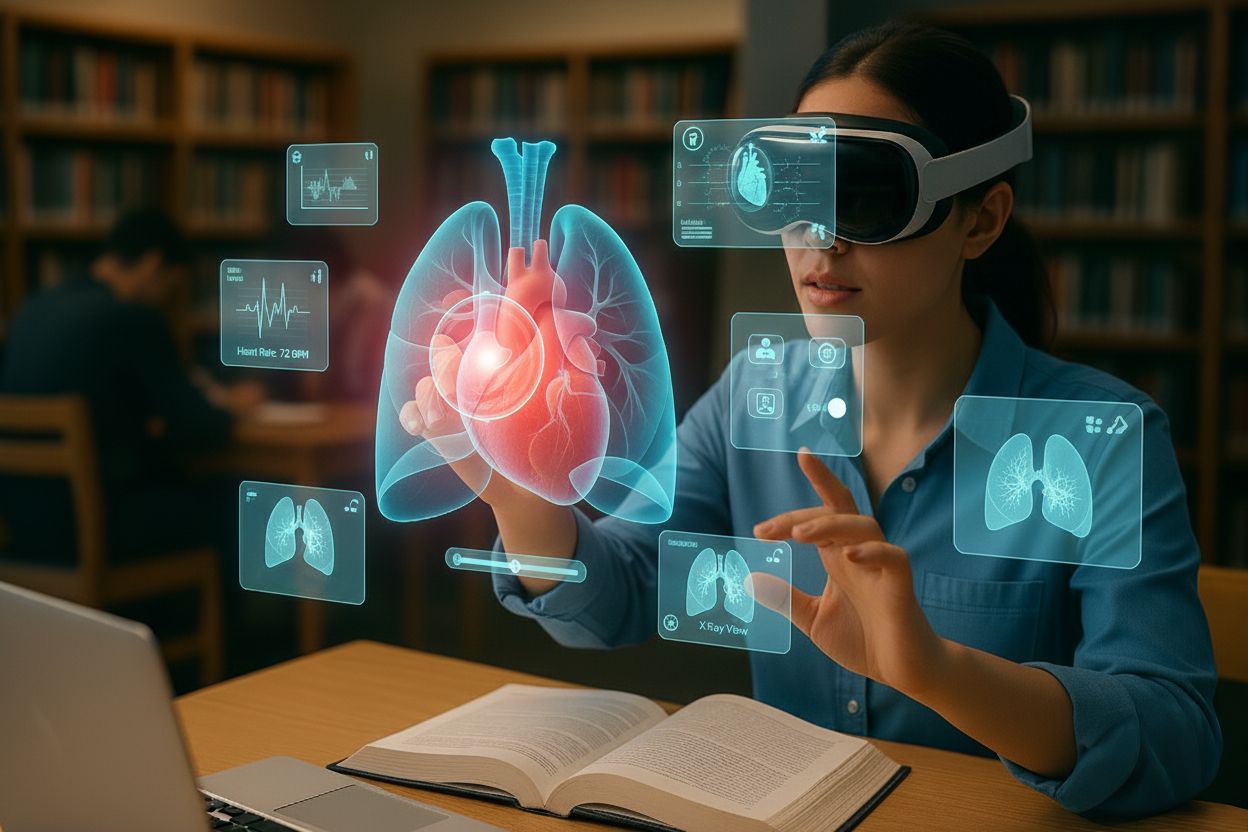
As a Dean, Curriculum Director, or Simulation Lab Manager in Medical Education, you are at the forefront of preparing the next generation of healthcare professionals. You know the challenge: the demand for highly skilled clinicians is soaring, driven by a growing, complex healthcare market. Yet, the traditional learning environment struggles to bridge the gap between textbook knowledge and clinical reality.
Consider these all-too-familiar educational bottlenecks:
Scarcity of high-fidelity practice. Access to cadaver labs, OR time, and specialized equipment is limited and costly, restricting the repeatable, hands-on practice essential for surgical and procedural skill acquisition.
Assessment inconsistency. Ensuring every student receives standardized, objective evaluation across complex clinical scenarios is a logistical nightmare.
- 11–0
- years to become a doctor
- $0k
- To become a doctor in the US
- 1 in 0
- Medical students consider dropping out
- 0%
- theoretical knowledge is forgotten within 24 hours.
It's time to stop the cycle of inefficiency. It's time to build true, lasting expertise. It's time to embrace a new reality in medical education.
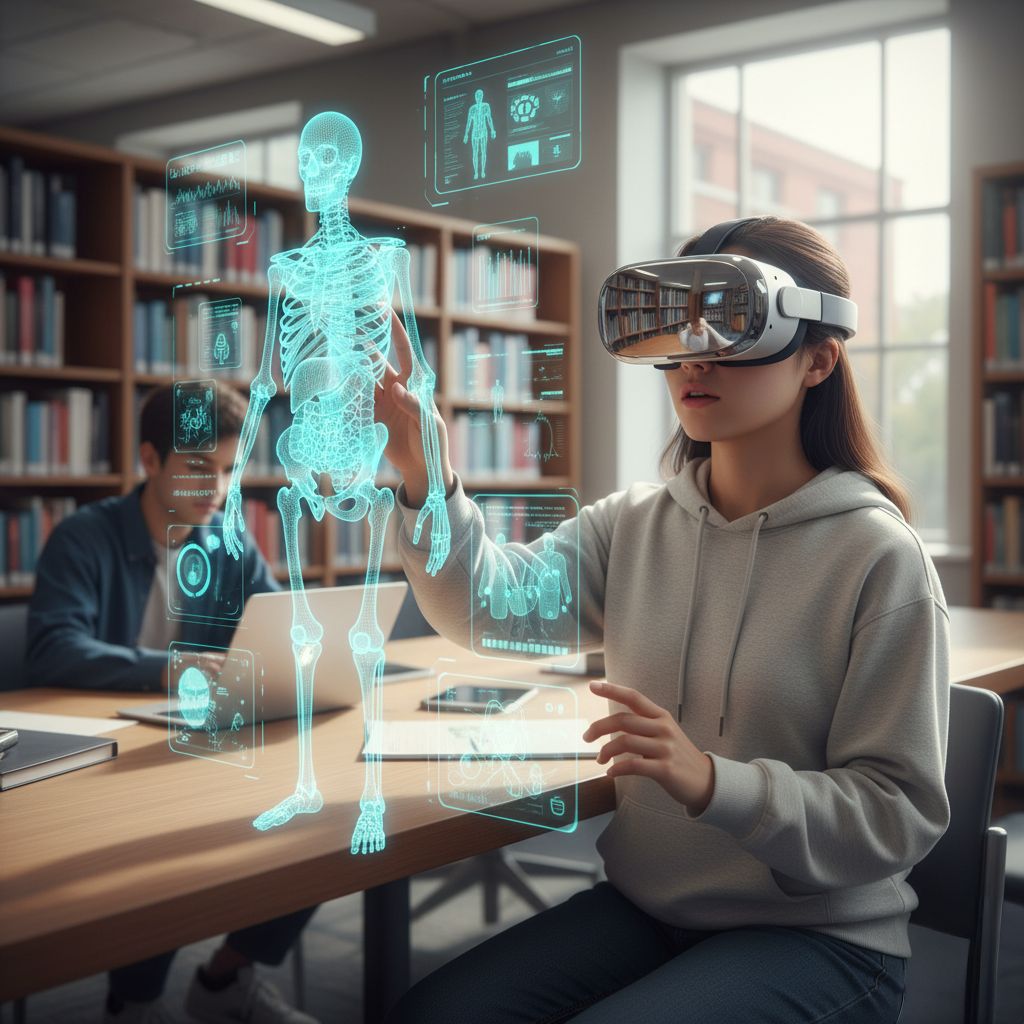
Why does this happen? It's not a reflection of student capability or faculty dedication. It's simply human nature, amplified by outdated methodologies. Our brains are hardwired for engagement and application, not passive consumption. The Ebbinghaus Forgetting Curve isn't just psychological trivia; it's a stark reminder that static lectures and passive reading are fundamentally at odds with how adults truly master complex, three-dimensional clinical workflows and anatomy.
The good news? We're on the cusp of a significant shift. While traditional Learning Management Systems (LMS) provide foundational knowledge, the future of truly tailored learning lies in blending these platforms with more dynamic approaches. This new era of training is being driven by immersive technologies like Mixed and Augmented Reality, which are supercharged by Artificial Intelligence (AI) to transform passive content into adaptive, personalized learning experiences.
While some may see barriers in initial hardware costs or complex integration, these are rapidly diminishing as new, more cost-effective devices enter the market and as software solutions become increasingly plug-and-play. This creates an unprecedented opportunity for early adopters to gain a critical edge, leveraging new, exciting, and engaging methods to accelerate learning and differentiate their approach.
The mixed and augmented reality solution married with real time AI: Education for lasting impact
Our belief is clear: a strategic combination of Mixed Reality (MR), Augmented Reality (AR), and AI will transform Medical Education. This isn't about replacing human instruction; it's about empowering it. It's a strategic shift that directly addresses the psychological and practical limitations of current learning models.
Countering the forgetting curve with experiential learning
Instead of just reading about anatomy or a complex procedure, students can actively engage with it. Through MR, they can interact with 3D holographic models of complex anatomy, organs, or medical devices right in front of them. They can virtually disassemble systems, explore physiological functions, and practice diagnostic protocols as if they were real. This hands-on, experiential learning bypasses passive retention, embedding knowledge through active “doing.” This approach can drastically accelerate concept mastery, getting students proficient in weeks, not months.
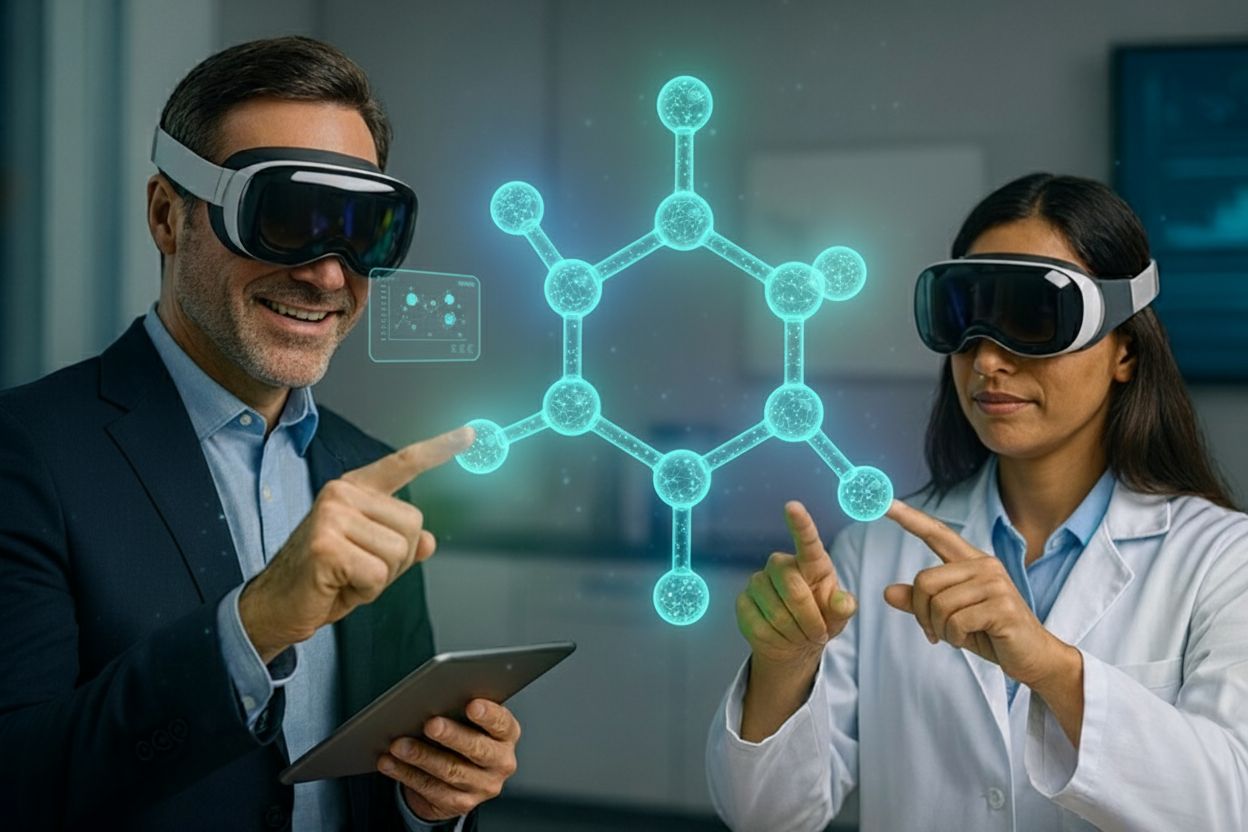
This hands-on, experiential learning bypasses passive retention, embedding knowledge through active “doing.”
Building confidence through realistic simulation
The pressure of a critical clinical decision is intense. With MR, students gain a safe, repeatable environment to hone their skills. They can practice diagnostic interviews or simulated surgical steps using AI-driven virtual patients and clinical scenarios. The AI system provides objective, immediate feedback, transforming theoretical knowledge into practical, high-performance clinical behaviors. We're not just giving them information; we're training them on how to effectively perform under pressure.
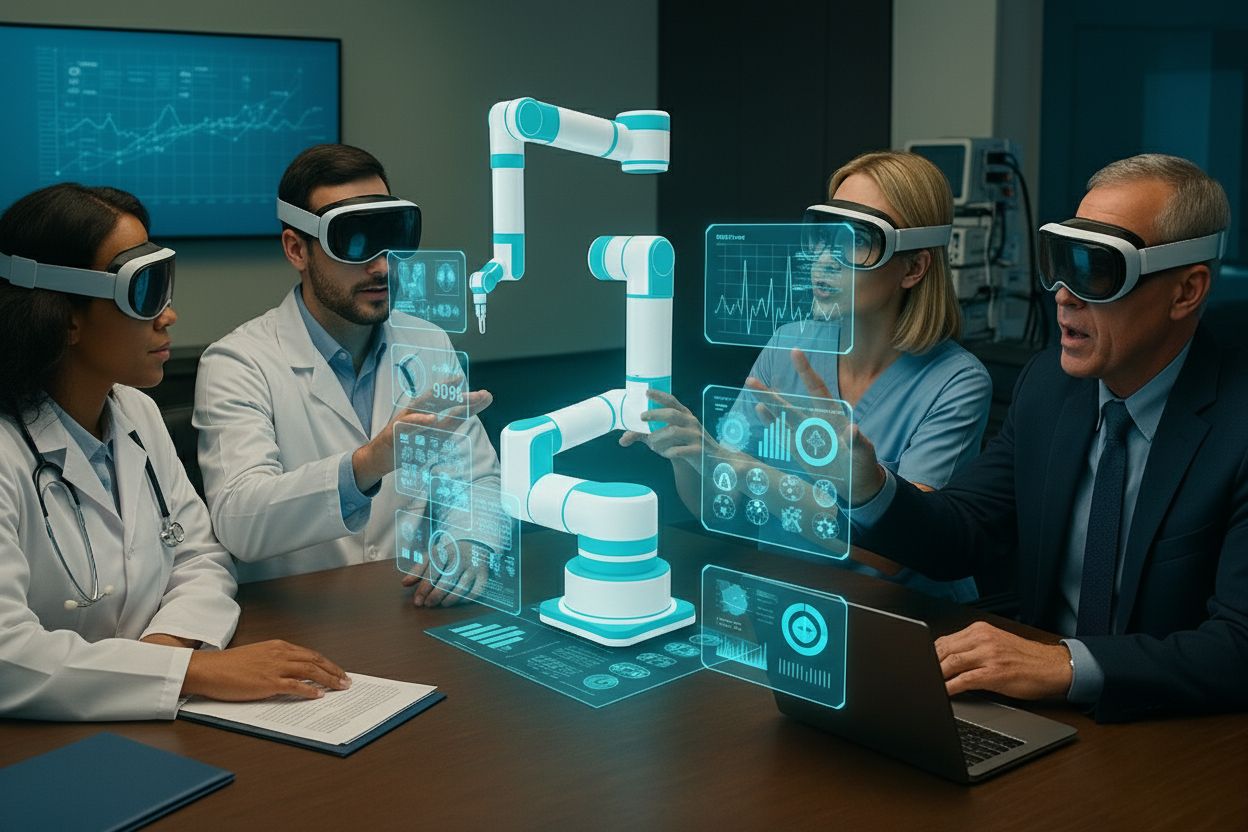
They get objective, immediate feedback, transforming theoretical knowledge into practical, high-performance sales behaviours.
Transforming lectures from “show and tell” to “immerse and understand”
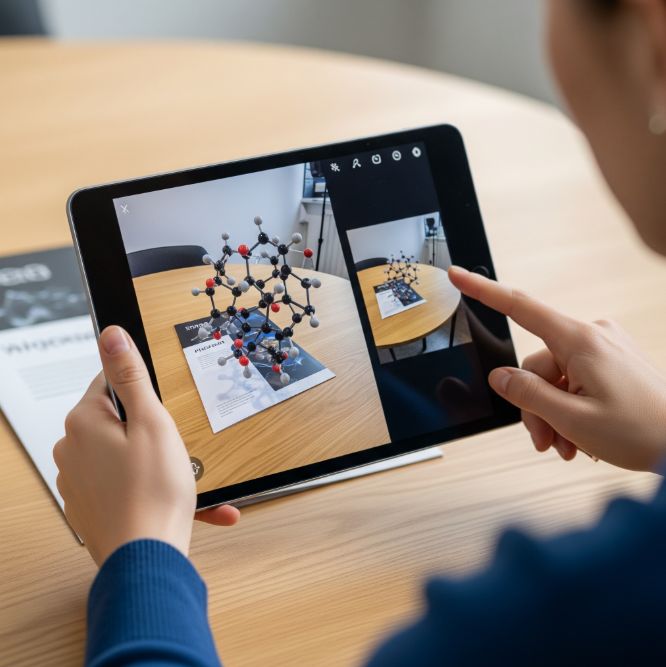
How often does an instructor struggle to convey the spatial complexity of the human body or a new mechanism? MR and AR change the game. An instructor, using an MR headset, can “place” a life-size, interactive holographic human heart or a drug molecule directly onto a lecture hall table. Students can then collaborate with the model and their peers. They can rotate it, examine its features, and truly understand its function. For self-directed study, AR, accessible via a tablet or even a smartphone, allows students to scan lecture notes and instantly see a 3D animation, reinforcing key concepts. These immersive demonstrations don't just show; they create a deep, memorable understanding.
The future of education: an integrated ecosystem
The acceleration of MR and AR in medical education is supported by an exciting evolving ecosystem. We're seeing powerful, more accessible hardware emerging, from cutting-edge devices like the Apple Vision Pro to new headsets within the Android XR ecosystem (like Samsung's ‘Project Moohan’). This range of devices, from high-fidelity immersive experiences to more accessible mobile AR, allows for flexible, multi-tiered learning and assessment strategies tailored to different institutional needs and budgets.
Crucially, the deep integration of Artificial Intelligence (AI) and the expansion of 5G infrastructure are supercharging these technologies. AI will personalize learning, offering each student adaptive pathways and real-time coaching based on their unique performance data. And 5G will provide the low-latency, high-bandwidth connectivity needed for seamless multi-user collaboration in virtual spaces and robust cloud-based rendering, enabling powerful, interactive experiences anywhere. The intersection of MR, AR, AI, and connected data platforms is where the fastest innovation will occur, and where true institutional leadership will be forged.
For us, as educational leaders, the call to action is clear: while this technology is still new, those who strategically invest in this journey now will have an early advantage. By testing and learning, you can leverage these tech breakthroughs to standardize teaching and assessment before this approach becomes business as usual. This translates to superior student outcomes, reduced reliance on costly physical resources, and a clear path to market leadership in medical education.
“Those who invest early will gain lasting market advantage”
Next steps
Let's start with pilot programs focused on core anatomy, diagnostics, and clinical procedural training, where we can measure clear ROI in reduced teaching time and improved student competency scores. From there, we can strategically expand, leveraging these powerful tools to tackle our most complex curriculum challenges. By investing in an integrated, scalable, and hardware-agnostic immersive platform, we can transform our educational delivery, securing our position as a leader in preparing the next generation of expert clinicians.
This isn't just about adopting new technology; it's about unlocking our students' full potential.
Considering a pilot?
We help institutions scope immersive pilots that produce evidence, not just a demonstration. Tell us what you are trying to prove.
Related content
 White paperOphthalmology
Roadmap to success
The adoption of immersive solutions is not a single event, but instead a comprehensive journey.
14 min readRead more Case studyOphthalmology
Democratizing ophthalmic knowledge
Physician leadership was critical to success as it would not only guarantee accuracy and educational integrity but also aid in adoption and scalability.
Read more Case studyOphthalmology
Unlocking adoption for global access
A key breakthrough for the project was achieved when hospital-based training was introduced.
Read more