Clinical areas
Surgical teams, confident before the first case.
Immersive VR that teaches robotic setup, configuration and operation at scale, so the learning curve stops slowing adoption of a new platform.
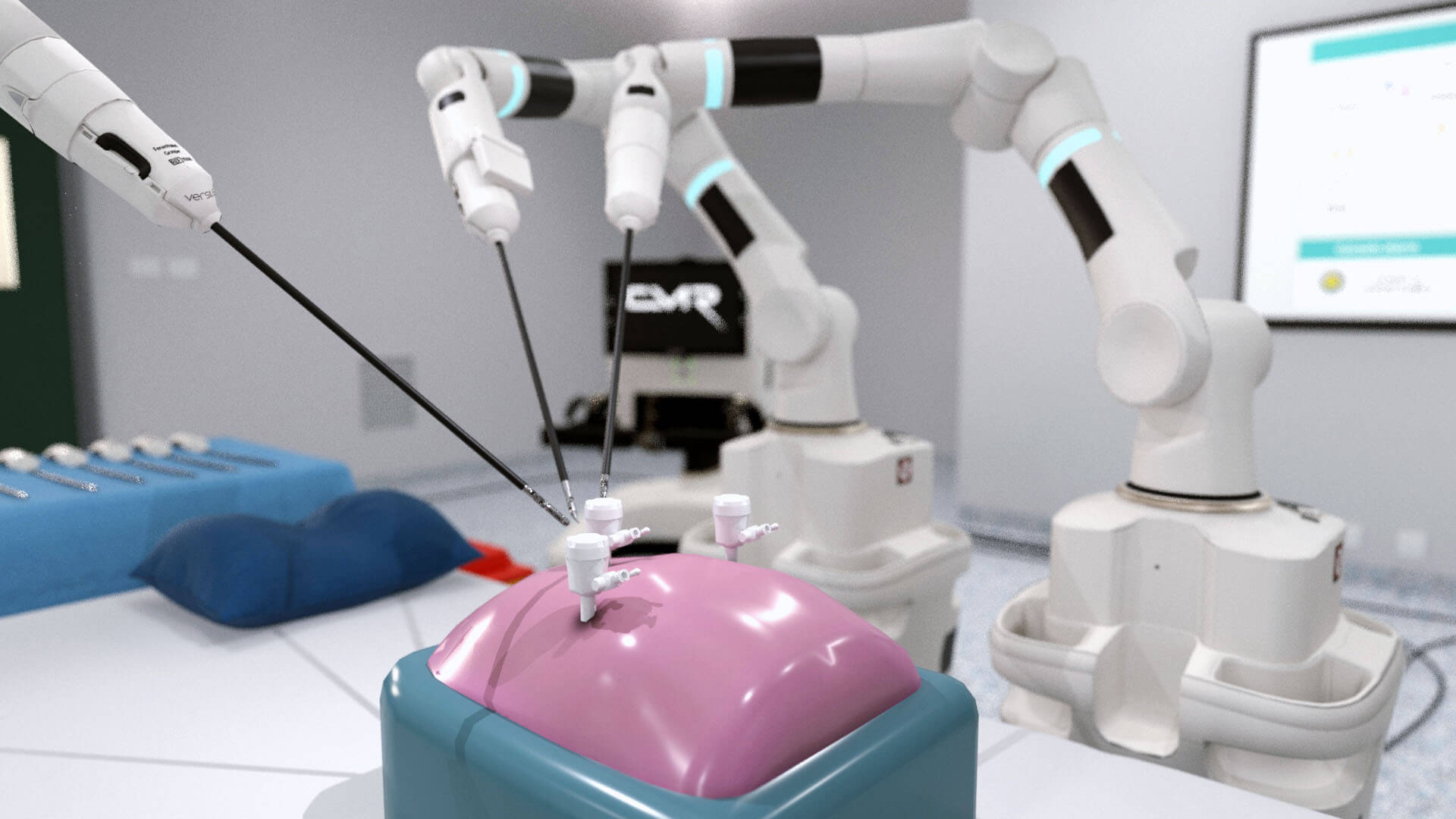
A robotic platform has to be learned by a whole team before it reaches a patient.
Robotic surgery is not one person's skill. Setup, draping, configuration and console operation are a team performance, and every one of them has to be right.
Cadaver labs are scarce and expensive.
Operating room time spent training is operating room time not spent operating.
Fundamental XR trains the whole team at scale, and reports what each of them can do.
Who this is for
This works best for companies bringing a robotic platform to market, with a defined group to train and a launch timeline to protect.
- Commercial and training leads preparing a platform launch, or scaling adoption of one already in market.
- Programs training customers rather than only internal staff: surgeons, nurses, technicians and bedside assistants.
- Training that has to evidence competency, not assume it.
- Deployments across several sites or countries, where in-person proctoring does not scale.
Want to see how competency gets measured? Start with the Insights Platform. →
The impact in real numbers
$0k
estimated cost saving per training course trainee.
0%
improvement in independence. Learners complete tasks on their own over 300% better than with e-learning.
0%
less hands-on help from instructors than e-learning groups.
0%
faster training. Time to train on robotic systems reduced from five days to two.
Where we fit in the clinical journey
Four stages, from first exposure to documented competency.
Assess and educate
Before stepping into a physical operating room, trainees learn complex robotic hardware in a safe digital environment. Interactive modules guide internal teams, technicians and healthcare professionals through core knowledge, with in-VR visual cues and AI assistants that explain key concepts and safety protocols.
In action
a full simulation built for CMR Surgical, training customers on the setup of the Versius robotic system, including configuration, console operation, safety checks and draping.
Plan
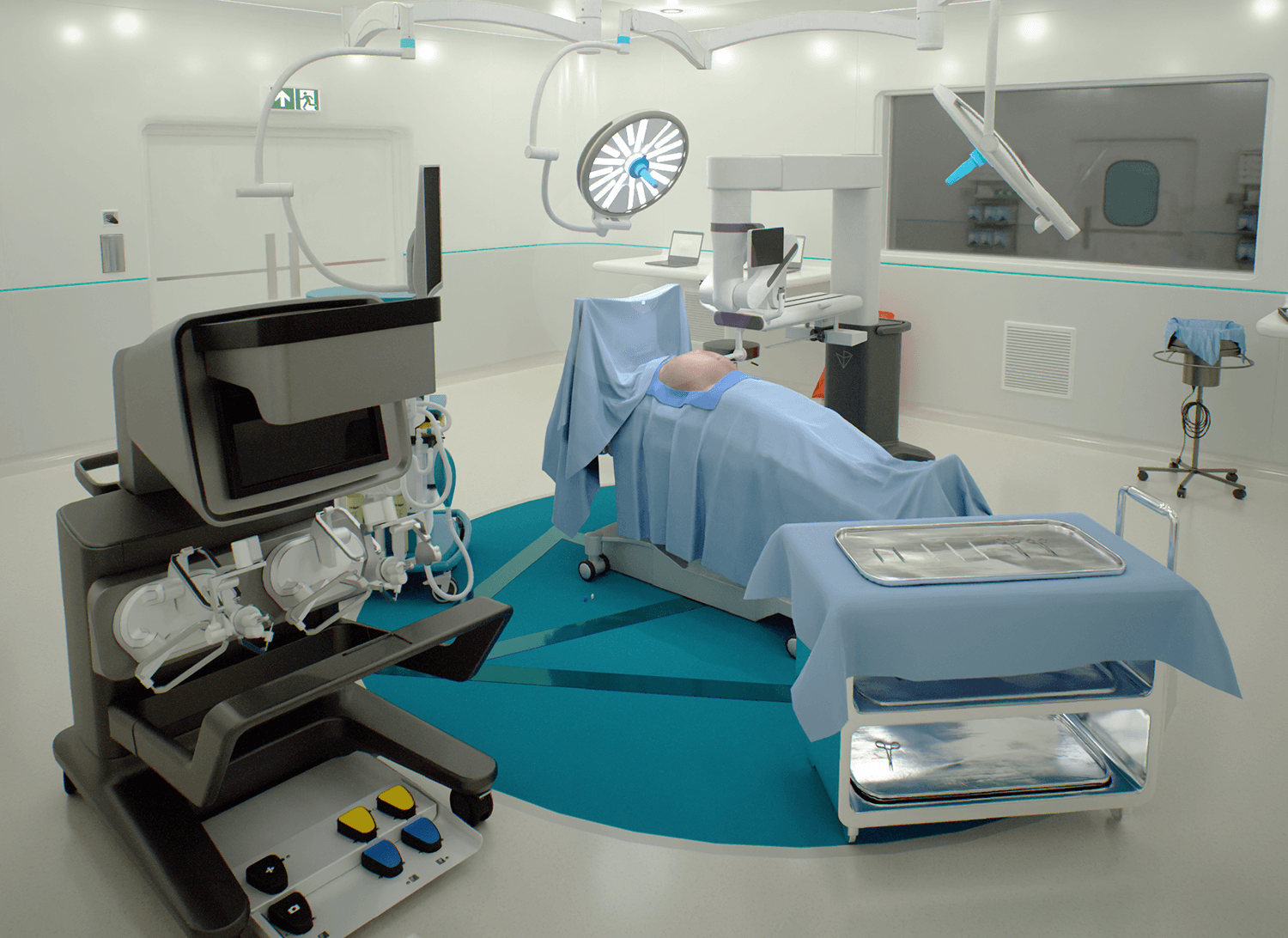
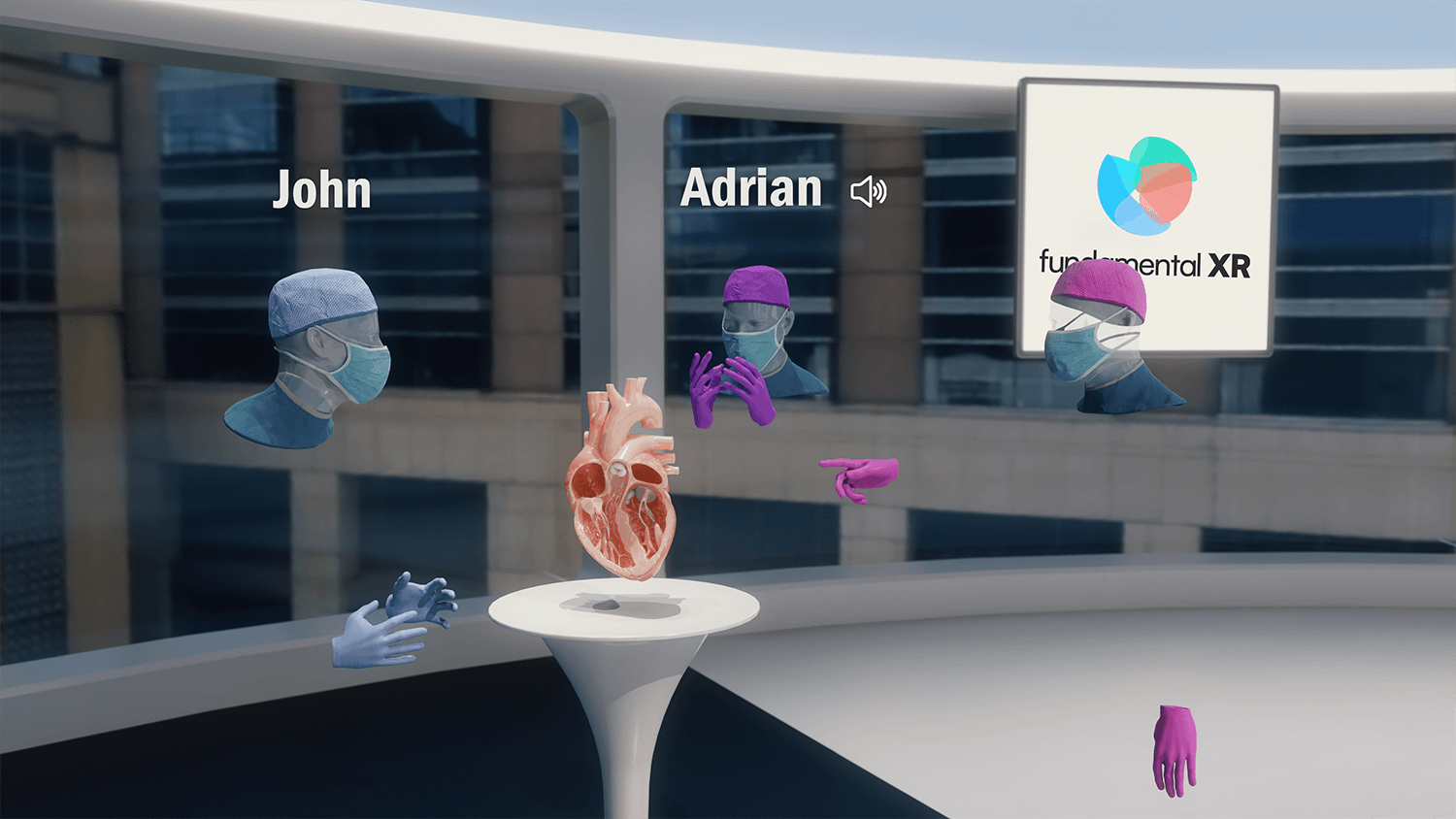
Robotic surgery requires precise spatial planning and team coordination. Our multi-user virtual operating rooms contain accurate digital twins of surgical robotic systems, so a full surgical team can plan room setup, practice placement at the bedside and align workflows in real time, without using operating room time.
Treat
Moving from setup to surgery, users master the console and the procedural workflow. We simulate inverse kinematics, complex access procedures, and soft-tissue cutting and suturing, so device skills and surgical steps can be practiced safely and repeatedly without cadaver labs or risk to a patient.
In action
a high-fidelity simulation of intra-abdominal soft-tissue surgery, with realistic physics and interactive modules, supporting both surgeon training and investor demonstration.
Prove
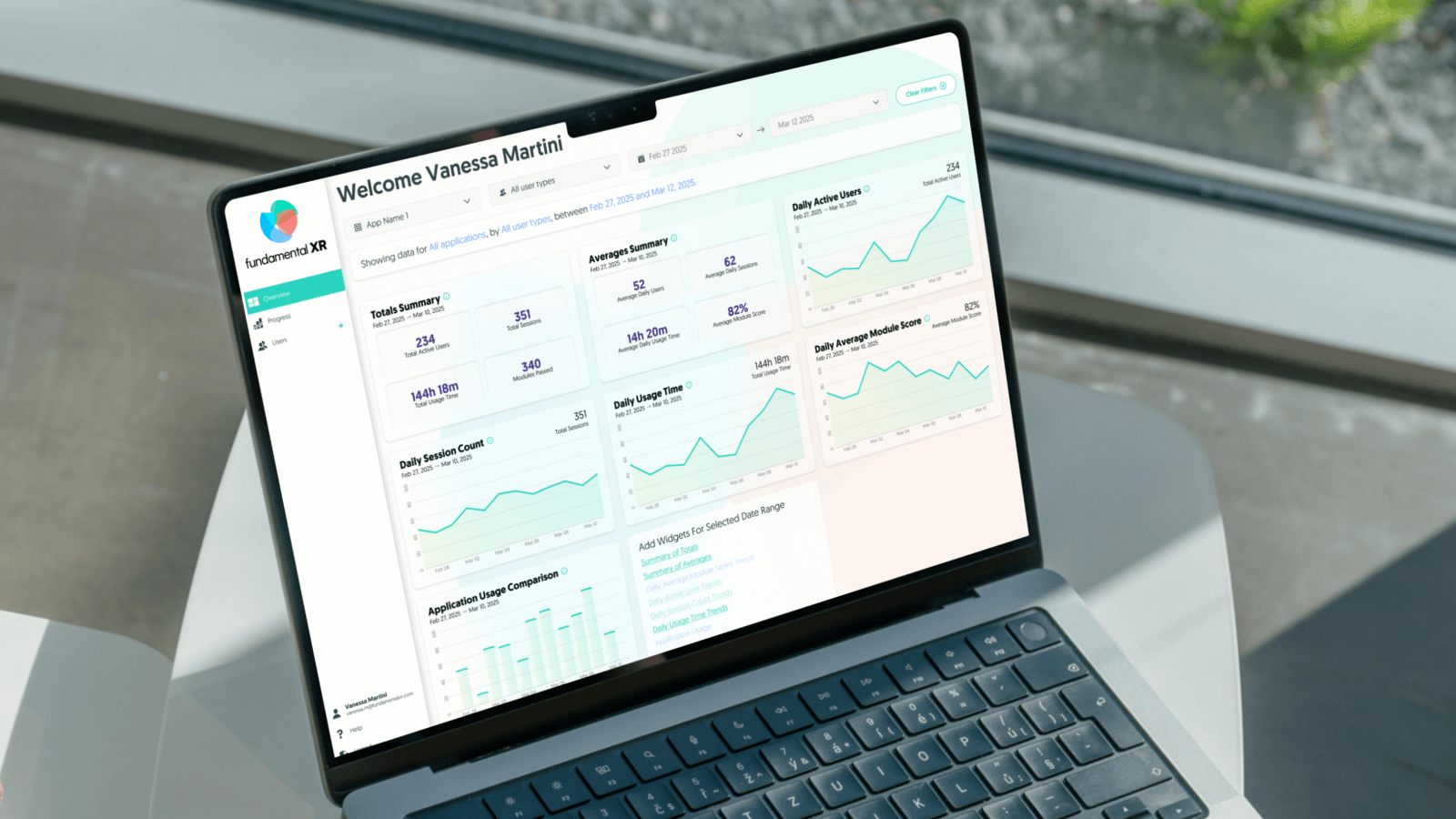
Proof of competency matters in high-stakes robotics. Subjective feedback is replaced with objective performance reports generated on module completion, so healthcare professionals can assess task completion against fixed records that show readiness for live robotic cases.
How we work with you
Simulation is the product. The partnership is what makes it land.
Patented haptics
HapticVR® is our own patented hardware and software integration. It replicates true tissue resistance and tool torque, which is what makes rehearsal build muscle memory rather than familiarity.
Accredited training
Our training carries Royal College of Surgeons CPD accreditation, the first in its category, and AAOS accreditation, so a training lead can defend the choice internally.
Competency you can report
The Insights platform captures error, time and learning-curve data for every learner, so competency is reported rather than assumed.
Your experts, our teams
Our medical education, design, 3D and engineering teams work with your key opinion leaders to define the simulation, build it, validate it clinically, and stay with it after deployment through customer success and ongoing support.
Deploy anywhere
The same training deploys across immersive, desktop and web, so a global network is not limited by who has a headset.
Go deeper on robotics
See what readiness looks like for your platform
Thirty minutes. Bring the system and the team that has to learn it. We'll show you what we'd simulate, what we'd measure, and what evidence you'd have at the end.