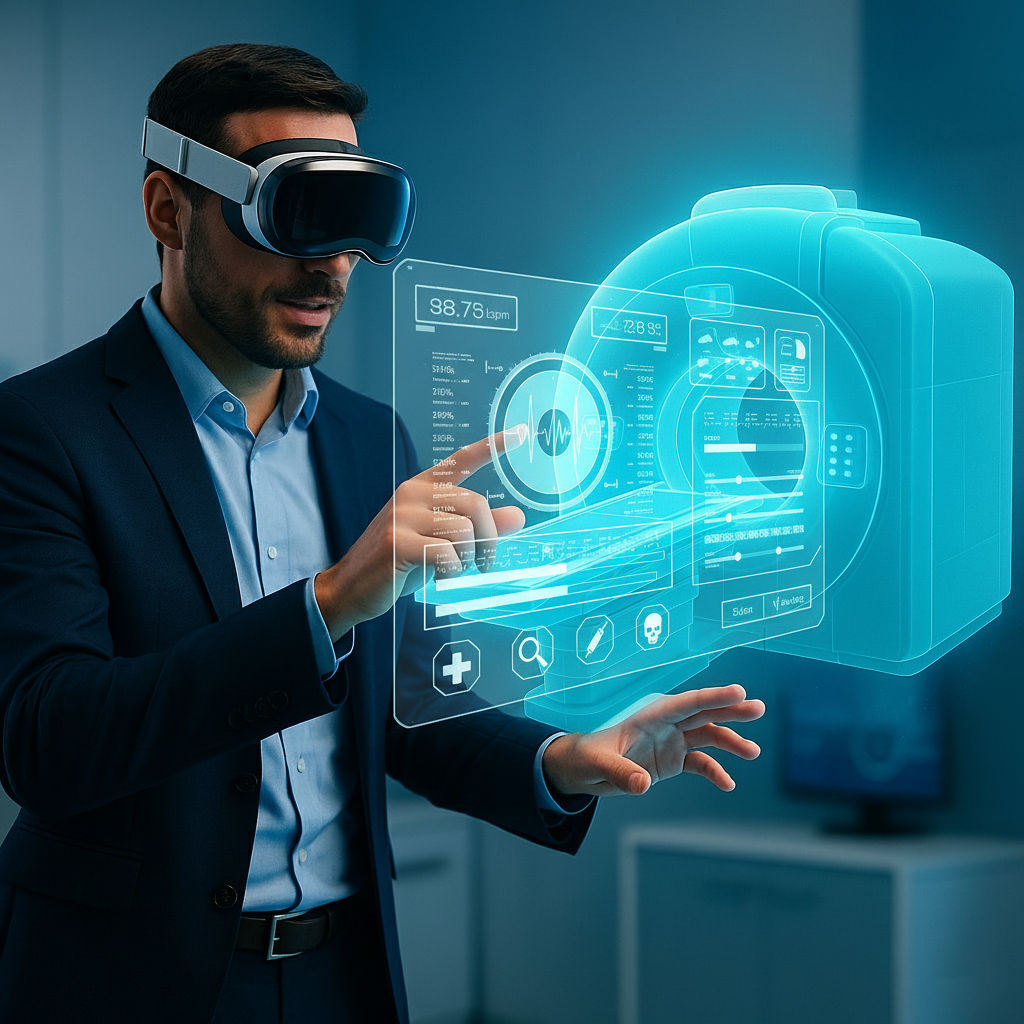
Mixed Reality: From Novelty to Normality a:link, a:visited { background-color: #29D3C0; color: white; padding: 14px 25px; text-align: center; text-decoration: none; display: inline-block; Download The Whitepaper All day wearable intelligence is the future of XR, a radical transformation to how enterprises function. From clinical training to customer services these always on, contextual AI devices are just around the corner. Now is the time for organizations to test, learn, and form strategies around how and when they will become part of their platform. In this article, we explore how we got here, what it means and how you might harness the opportunities this paradigm shift will create. The first wave Over the last decade, immersive technology has been through its share of hype cycles. From the early excitement around Oculus Rift in 2013, to the buzz around HTC Vive’s room-scale VR in 2016, and in 2019 Meta’s standalone Quest device made VR accessible. Despite progress, people close to VR have witnessed fatigue. VR was full of promise and hype, driven by everything from films like Ready Player One to Meta’s commitment to the Metaverse, but outside of gaming and niche training, adoption stalled. Things have changed in the last 18 months, when Apple entered the market with Vision Pro. The focus shifted from escapist virtual reality to the blending of digital and physical environments. To Apple, this was the birth of ‘Spatial Computing’, not simply their own version of a headset. From evolution to revolution Until recently, improvements to immersive technology were incremental; lighter headsets, sharper resolutions, more sophisticated controllers, and more powerful processors. Important steps, but evolutionary, not transformative. At the time Vision Pro was released, another much larger revolution was well underway. In early 2024 ChatGPT was already one of the most visited sites in the world with 1.6bn monthly visits. In late 2025 it had 700 million weekly users, processing billions of prompts on a daily basis. Today, AI features in practically every piece of software used in the workplace. We are about to see a big shift. The convergence of mixed reality and artificial intelligence, coupled with form factors that resemble everyday eyewear, represents a step change. Where VR was about immersion, MR is about integration, and with AI at the platform level this will form an invisible digital layer overlaid onto our daily lives and work. The next decade will be defined by this convergence. Mixed reality is no longer a futuristic concept. The second wave of intelligent spatial computing will be the arena where this will play out. Why this time is different Apple reframed expectations around immersive technology: eye-tracking, gesture-based control, and experiences that sit within the context of the real world rather than replacing it. This marked a critical pivot away from virtual escapism, toward computing that augments reality. The quality is outstanding, but the high price tag has prevented it thus far from ever becoming a mass market device. Competitors have taken note, and are leveraging advantages in their AI offerings. ● Meta have just announced their first display glasses with a wristband for gesture control ( Meta Ray Ban Display) . ● Samsung and Google are collaborating on Moohan , a premium MR headset with native AI features powered by Gemini . ● OpenAI is preparing a wearable ambient computing device. ● Amazon is set to release Jayhawk smart glasses, designed both for consumers and, crucially, the first users will be their own, supercharged, workforce. ● Meta will follow with Artemis , their 2nd gen glasses, while Apple continues to advance with Vision Air and, eventually, full AR glasses. ● By 2028, mixed reality glasses will be commonplace in enterprise markets and use cases. The role of AI in Mixed Reality What distinguishes this moment is the integration of AI at the platform level. For the first time, mixed reality environments will be context-aware and intelligent: ● Conversational Assistance : Natural interaction with digital systems through voice and gaze, supported by AI agents that understand the task at hand. ● Contextual Audio : Personalized guidance delivering timely prompts, coaching, and reminders without breaking workflow. ● Object Recognition : Devices will recognize equipment, environments, and even workflows, triggering relevant information or adapting content dynamically. ● Continuous Feedback Loops : Performance monitoring, data capture, and evidence of competency, making training and operations smarter and more accountable. These features move mixed reality from being a device you put on for specific moments to all-day wearable intelligence that becomes your companion at work. The glasses era and ambient computing Bulky headsets will not define the next decade. Instead, we are heading into the glasses era : lightweight, socially acceptable devices that can be worn throughout the day. More than displays, they will be the interface for ambient computing , where AI-driven intelligence is seamlessly woven into the environment. In this model, computing shifts from something we reach for, like a phone or laptop, to something that surrounds us. We will glance at a colleague and see shared data appear, or look at a piece of equipment and receive instant, hands-free guidance. Collaboration becomes natural, context-rich, and continuous. What does this shift mean for healthcare and medical device manufacturers? Industry impact: from healthcare to enterprise The implications are profound. In healthcare, mixed reality ambient computing will underpin: ● Seamless Clinical Integration : From consultations to surgery MR will provide patient-specific context and live data feeds, integrated with hospital systems. ● Hyper-Personalized Training : AI will adapt content to a clinician’s performance, ensuring continuous professional development long after their first human case. ● Operational Support : Device setup, troubleshooting, first-time use, and field service will be accelerated and made more reliable through MR glasses. ● Regulatory Confidence : Intelligent monitoring and evidence of competency will allow MedTech companies to iterate faster and gain approvals with less friction Beyond healthcare development and delivery, enterprise adoption will follow similar patterns. Sales enablement, workplace training, and industrial maintenance are all ripe for transformation. AI-powered mixed reality will become the standard for how sales teams share immersive demonstrations with clients, or allow field technicians to access step-by-step support while keeping both hands free. Looking ahead to 2030 Before the end of this decade, mixed reality and ambient computing will be embedded into enterprise infrastructure. Leading pharma, Med Device and MedTech companies will rely on it to create, train, validate, and transform their operations. This trajectory mirrors the path of the smartphone. What began as a niche device quickly became the default platform for communication, productivity, and commerce. Mixed reality is on the same path, but this time, AI is the accelerant. As glasses become mainstream, the integration of real-world context with intelligent computing feels inevitable. Preparing for the shift This change is already underway, the message is clear: don’t wait for the market to settle. Start experimenting now . Prototyping, user testing, and building business cases are essential steps in preparing for a world where ambient mixed reality is the operating system for work. This is not chasing hype; it is about aligning strategy with the technologies that will define the next decade. Mixed reality will move away from being a clumsy side project, it is the future of human-computer interaction. Companies that embrace it today will be the ones shaping the standards of tomorrow. a:link, a:visited { background-color: #29D3C0; color: white; padding: 14px 25px; text-align: center; text-decoration: none; display: inline-block; Download The Whitepaper